Showing posts with label Smile Station. Show all posts

Thursday, February 12, 2015

Smile Designing - Part 2

The importance of good planning and preparation


As discussed in the first part of this blog - What is Smile Designing?, the key to Smile Designing is in the planning. 


Evaluation and Assessment


Your dentist will first make a full assessment of all components which contribute to your smile. It is important to consider how, not only your teeth, but also your facial features and gums contribute to your overall smile. 

While your dentist will discuss and seek to address aspects of your smile which you dislike and want to change it is important to make a full assessment so that the end result will be in harmony with your facial features, age, gender and personality. 


You can think of it in terms of the way architects design and plan a building. They will not consider the more cosmetic features first, such as the windows and balconies. First importance should be given to the overall structure and foundation. In the same way, in Smile Designing, the aim is to create a smile which will be functional and lasting, not only nice to look at. 


Any underlying dental or gum problems will also need to be diagnosed and treated first. There is no point designing beautiful crowns or veneers and placing them on teeth which have hidden decay or will become loose in future due to gum problems.


Several diagnostic aids may be used in evaluation and assessment:
  • Before and after photographs
  • X-rays - to assess the jaw bones and teeth
  • Facial measurements - to assess proportions and alignment
  • Study models - made after taking impressions of your teeth
  • Wax-ups - the planned changes to teeth can first be demonstrated in wax on the study model


Facial Assessment

If the are discrepancies in the proportions, alignment or symmetry of the face this will affect the smile. 


For example, some people have a discrepancy between the size of the upper and lower jaws in relation to each another. In more severe cases adjustments to the teeth alone may not be sufficient. Surgery to correct the position of the jaw bones may be required.


In cases where the chin, cheeks or lips appear out of proportion cosmetic surgery may be used to give a better appearance.


Orthodontic Assessment


It is important to evaluate the position of your teeth in relation to your jaw bones and each other, especially when you bite together. A poor bite can affect not only appearance but also normal chewing and speech. The way your teeth meet will also determine how much space there is for placing crowns (caps) or replacing missing teeth with either implants or bridges.

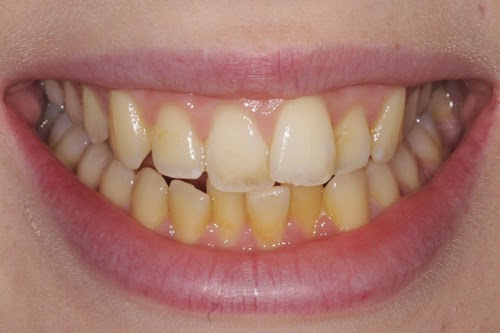
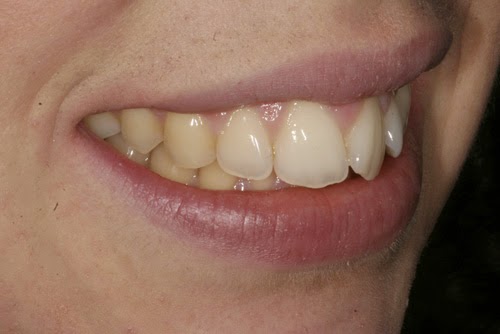
Inman Aligner
If there is a significant bite problem, orthodontic treatment with braces may be required before other treatment can be carried out. Even smaller problems, such as crooked front teeth, are often best corrected with modern types of braces either instead of or prior to placing crowns or veneers.


Periodontal (Gum) Assessment 


Healthy gums are  a major part of your smile. Not only do healthy gums look good they are also important in providing support for your teeth. 

If gum disease is left unchecked the gums will recede so that the roots of the teeth become visible. Also, the problem can spread to the bone surrounding the teeth, causing teeth to become loose. As well as professional cleaning, thorough brushing and flossing of your teeth at home is vital to maintain healthy gums. 

Your dentist will assess the gum level in relation to the teeth and the amount of gum which shows when you smile. Where more complex gum problems are found referral to a periodontist (gum specialist) may be required.


Dental Assessment


There are many potential dental issues which may need resolving. 
Here are some examples:
  • Tooth decay
  • Staining or discolouration of teeth
  • Unsightly fillings, crowns etc.
  • Missing teeth
  • Gaps between teeth
  • Crowded teeth
  • Poor alignment of teeth
  • Tooth wear
  • Mis-shaped teeth
  • Too little or too much tooth displayed when smiling
  • Tooth dimensions out of proportion

The planning stage is vital in developing the correct plan for treatment. Your dentist will guide you through the process to create a long-lasting, beautiful smile.


In the next part we will discuss some of the techniques and treatments which may be a part of the Smile Design process.


Monday, February 2, 2015

Smile Designing -Part 1

What is Smile Designing?


A smile is one of your most noticeable features. A cheerful face makes you instantly more attractive and approachable. 


But what if you are self-conscious about your teeth or gums? 

Many people cover their mouths or do not smile fully for fear of showing features in their mouth that they do not like. 

Do you long to have a smile you are proud to show the world? 

This is where smile designing comes into play.


Smile Designing is the process of pre-visualizing the ideal smile and planning to predictably achieve the desired end result. 


In the past, dentists tended to deal with different problems in the mouth separately. Smile Designing is a comprehensive approach, taking into consideration the way the mouth is used in eating and speaking, as well as smiling. All the factors which contribute to your smile are evaluated -this includes not just your teeth and gums but also your lips, bones, muscles and skin. 

The aim is to create a balanced and harmonious smile which looks natural. The end result should match the facial features, personality and age of the individual. With careful planning and good maintenance the result will also be long lasting. 

It is important to find a dentist with the right training and experience in Smile Designing. To achieve the desired result a cosmetic dentist may need to work closely with other specialists such as orthodontists, periodontists and implantologists and oral surgeons. A great lab technician who uses the best materials is also vital.


At Smile Station in Bangalore Dr. Gurudev and his team use their training and expertise to give their clients smiles which they are proud to show to the world. 


In the following parts of this blog we will discuss the planning process and some of the techniques used in Smile Designing. 


Friday, November 7, 2014

Sensitive Teeth?

Why are my teeth sensitive?

Are your teeth sensitive?
Do you avoid cold food and drinks?
How do you know if it’s just sensitivity or a more serious problem?


How common is sensitivity?

It is very common to experience some pain with extremely cold food and drinks. Teeth may also be sensitive to sweet, acidic or hot food and drinks. It is more common in young adults and women report more sensitivity than men. More often dental sensitivity is mild but for some people it can have a significant impact on their daily life.


What causes tooth sensitivity? 


The most common cause of sensitive teeth is exposure of the dentine layer of the tooth. In comparison to the outer enamel layer of the tooth, which is the hardest tissue in the human body, dentine is softer and more porous. Changes in temperature or pressure cause movement of fluid within dentine and this stimulates pain receptors, causing sensitivity.


How does dentine become exposed?

In a normal, healthy tooth dentine is covered by enamel above the gum level and cementum on the root surface. The most common cause of dentine exposure is gum recession leading to exposure of the root surface. The cementum layer on the root surface is softer and thinner than dentine and is prone to wear away leaving the dentine exposed.


What causes gum recession?


  • The most common cause is gum disease caused by plaque build-up due to inadequate brushing and flossing.


  •  Brushing too aggressively with a wrong technique or a toothbrush that is too hard can wear down the enamel at the gum level as well as damage the gums. (For more information on brushing technique, click this link.)

  • Excessive clenching and grinding of the teeth can cause enamel at the neck of the tooth to become worn away and worsen pre-existing gum disease.

  • Using smokeless or chewing tobacco can lead to gum recession and more serious problems such as mouth cancer. Smoking also increases the risk of gum disease.

Dentine can also become exposed when enamel is worn away

This may be due to:

·         Long term tooth wear due to a heavy bite or tooth-grinding habit.

·         
     Frequent exposure of tooth enamel to acidic food and drinks.  

·         Stomach acid due to reflux or frequent vomiting.


·         Tooth decay


A cracked tooth of filling may also lead to sensitivity or pain.

Teeth may also be temporarily sensitive after placement of fillings or tooth whitening procedures.


How can I tell if sensitivity is a sign of a more serious problem?

It’s not always easy to tell. It’s always best to see your dentist if sensitivity is an issue so that they can investigate the cause and find the correct treatment.
If you experience pain for some time after the trigger has been removed, or if your teeth are sensitive to hot this is could be a sign of inflammation within the tooth pulp which contains the nerve.  This needs to be dealt with as soon as possible, to avoid losing the tooth.


How can sensitivity be treated?

This really depends on the cause. The following chart covers some of the most common causes:

Gum disease and recession
Improvement in brushing and flossing techniques.
Regular professional cleaning.
More complex periodontal treatment required for severe gum disease.

Tooth wear and toothbrush abrasion
Correct brushing technique using soft bristled brush.
Fluoride varnish.
Fillings or sealants may be required to replace lost tooth surface and protect exposed dentine.

Tooth grinding habit
Mouth guard can be made to be worn at night to prevent tooth grinding.

Acid erosion of tooth enamel
Change in diet, reducing consumption of acidic and sweet food and drinks.
Treatment of cause in case of reflux or vomiting.
Wait 20 minutes before brushing teeth after acid in mouth.
Fluoride gel or varnish.
Fillings, crowns or veneers may be required to replace lost tooth surface and protect exposed dentine.

Tooth decay
Fillings.
Root canal treatment may be required if decay is very deep and the nerve is infected.
Prevention of further decay.


How can I prevent tooth sensitivity at home?

Of course, if there are certain foods and drinks which trigger sensitivity, these are best avoided.

As mentioned above, good diet and oral hygiene will decrease your risk of dental decay and gum disease.

Fluoride helps to reduce sensitivity and decay, it can be found in toothpastes and mouthwashes.


Toothpastes made specifically for sensitive teeth also contain other mineral compounds which can help to numb the tooth nerve or create a protective barrier preventing stimuli, such as cold and heat, from causing pain sensations. You need to use these toothpastes regularly, twice a day. If particular teeth are sensitive, you can use your finger to rub a small amount of paste onto the sensitive tooth surface after brushing.

If you have any questions or concerns, please contact Smile Station (click for link), where we will be happy to help you.


Straight Front Teeth Fast!

Are you embarrassed about your smile?

Maybe you have crooked front teeth and have considered seeing an orthodontist but feel it is too late to wear braces as an adult?

Are you worried about the cost and length of treatment involved?


Thanks to a recent innovation in orthodontics, treatment may be easier, faster and less expensive than you expect.

The Inman Aligner uses 3D technology to safely straighten front teeth faster than other appliances.

How does the Inman Aligner work?


The appliance has nickel-titanium coil springs which power aligner bow wires which rest on the inner and outer aspects of the front teeth. This produces gentle forces which act over a long range of movement to guide the teeth into their new position. 


What does it look like?

The metal springs towards the back of your mouth may be visible when you smile. The part the brace on the front teeth is made from clear acrylic.

It looks much better than conventional "train-track type" braces but is slightly more noticeable than "invisible" braces which are completely clear.

The appliance can be removed for short periods of time for special occasions or taking photographs, as well as for daily cleaning.


What is the difference between the Inman Aligner and other types of braces?

Due its unique design, the Inman Aligner can safely straighten teeth faster than others appliances. Treatment is usually completed within 6-18 weeks.

"Invisible" aligners take at least 6 months and traditional fixed braces between 1 to 2 years to complete treatment. 

Faster results and fewer visits also means that treatment is less expensive.


Before treatment
After treatment


Which problems are suitable for treatment with the Inman Aligner?


  • Mild to moderate crowding or protrusion of front teeth.
  • Rotated front teeth.
  • Cross bites - upper incisor teeth behind lower teeth in bite.
  • Where front teeth have become crooked after finishing traditional orthodontic treatment.
  • Pre-alignment of front teeth before cosmetic treatment, such as veneers or whitening. In fact, the Inman Aligner has been called the "missing link" between cosmetic dentistry and orthodontics.

Before treatment

After treatment


What is involved in the treatment?

  • The appliance is removable, but in order to get the fastest results it must be worn at least 20 hours per day. 
  • A mould of your teeth will be taken so that the appliance can be custom made in a dental laboratory.
  • As with all braces, there may be some discomfort and speech may be affected when the appliance is initially fitted, but this should only last for up to a few days.
  • You would need to see the dentist for checks every 2 or 3 weeks whilst wearing the appliance.
  • After any orthodontic treatment, a retainer is advised to prevent the teeth moving back. This could either be a removable retainer, or a thin wire bonded to the backs of the teeth (where it cannot be seen).


Find a certified user


It is important to find an dentist who is trained and certified in using the Inman Aligner and uses genuine appliances. 

If you are in Bangalore, you are welcome to visit us at Smile Station in Indiranagar and discuss if the Inman Aligner may be the right solution for you.

Friday, July 25, 2014

Medical and Dental Tourism in India - Part 4

Part 4 - Dental Tourism


In the previous posts we have discussed the pros and cons of medical tourism as well as practical advice for those considering travelling for medical treatment.


In the section we will look specifically at dental tourism, drawing on our experience at Smile Station in Bangalore, India.


What is Dental Tourism?


Dental tourism is a subset of medical tourism. Sometimes also called a "dental vacation" when people combine a foreign holiday with seeking dental treatment.

Why is dental tourism becoming more popular?


Many people who have private, or government provided, medical insurance do not have dental coverage and therefore have to pay the full cost of treatment. Even those who have dental insurance are not covered for many treatments, such as implants and cosmetic dentistry. Extensive reconstructive or cosmetic treatment can be expensive. In the USA and Europe, comprehensive dental treatment has become unaffordable for many.


Travelling for dental treatment is popular, largely due to wide variations in treatment costs between countries.In some cases treatment may be much more affordable in a neighbouring country, such as in Mexico compared to the USA. People from the UK may travel to Hungary or Poland in Eastern Europe where treatment costs are considerably lower.


India is popular with individuals who have family in India and are living abroad as they may seek dental treatment whilst visiting relatives. Others visit for work, vacation or a spiritual retreat and take advantage of quality, affordable dental care whilst in India.

India offers a rich cultural experience and a full range of options, from budget to 5 star hotels, for those looking to combine dental treatment with an unforgettable vacation. 

Depending on the procedure, it is possible to make savings of 50-90% compared to the cost of treatment in the USA or Europe. Even after adding travel and accommodation costs, big savings can be made. 


Developing countries are able to offer more affordable care due to lower overhead expenses, such as the cost of labour, insurance and less bureaucratic red tape. However, there is also generally less regulation of the dental profession.  There is currently no independent, international inspection committee for dentistry, unlike the Joint Commission International (JCI) which accredits hospital and medical care providers. Therefore, it is vital to do your research well in order to find a well qualified, experienced and ethical dentist.


Which procedures are suitable for dental tourism?


The most popular procedures for dental tourists are:


Procedures are usually elective (planned in advance) although emergency treatment may also be sought by those travelling for business or pleasure.

What do I need to consider if I am planning dental treatment abroad?


In addition:

  • Do your research and get recommendations and reviews from verified patients.
  • Check your dentist's training and experience and whether they have international qualifications or certification.
  • Make sure that the clinic is clean and sterilization protocols are followed.
  • Find out about the treatment and how many visits will be required.
  • Discuss the best treatment option for you and any risks or precautions.
  • For complex restorative treatment, such as implants, crowns and bridges, the timing of multiple visits will need to be carefully planned.
  • Find out what travel and activities may be advised or avoided in the post treatment phase.
  • Enquire about treatment costs and any guarantees for implants, crowns and bridges etc.
  • Consider whether you will be able to return for follow-up or maintenance, or whether you will require follow-up treatment in your home country.

The Smile Station Experience


At Smile Station, in Bangalore, we are regularly welcome international clients, as well as those from other parts of India. Our team of internationally trained and certified consultants are able to provide a full range of dental treatment under one roof. Treatment options, along with their risks and benefits are fully explained so that you can make an informed choice. We have a proven track record in providing high quality, professional and ethical care. 

The clinic environment is relaxed and welcoming and we specialize in helping those who are anxious about dental treatment. The practice is well equipped with the latest technology and materials and a strict sterilization protocol is followed. We used internationally acclaimed dental laboratories to provide world class restorative treatment at an affordable cost. We are also able to arrange airport transfers and travel and accommodation in India.


We have received great feedback from our international clients, many of whom return to Smile Station whenever they are in India.

Here are just two testimonials:

“What an incredible experience! I needed four crowns Dr. Gurudev & his staff went out of their way to accommodate me in the short time I was in Bangalore. Friendly and Professional service at a fraction of the cost in the US.” 

Linda Busi, Santa Fe, New Mexico, USA


Dr. Guru Dev is one of the best dentist I have ever been to....and I've had a lot of excellent dentistry in my life....with having 26 gold porcelain crowns in my 20's. While in India for a long time I had some serious dental problems that I saw 2 dentist for...both of whom said that the tooth needed to be pulled. Being extremely emotionally sensitive to dentistry and feeling no trust in either of them a friend suggested I go see Dr. Guru Dev. He took charge right away with calmness, and gentleness through every procedure. He saved that tooth through a very complicated root canal, and then came the crown. He became my dentist from that point on ....through an extraction, and eventually to an implant which I was very scared to have done. Now back in the US every dentist I see asks who did it and how well done it is. I have had no problems since. I only wish Dr. Guru Dev had a dental practice on the West Coast of the US! Thank you Dr. Guru Dev for all your care and professionalism. Lucky people in Bangalore! 

Christinea Johnson, California, USA


If you would like to know more, please check the Smile Station website (click for link)

Friday, April 4, 2014

Overcoming Dental Anxiety - Part 3

As we discussed in the first part of this blog, dental anxiety is common. However, individuals may face different issues depending on their personalities and past experiences.

In the following 2 sections we will cover some specific fears and anxieties and look at ways of overcoming them.

Loss of Control


A big issue for many people is the feeling of loss of control when visiting the dentist. You may feel like you do not know what is going on in your mouth or that you are not able to have a say in what the dentist does.

You may have had bad experiences in the past with a dentist who did not explain what they were doing or why. This may have given you the feeling that dentistry is something that "is done to you" rather than you being a partner in your dental care.  As discussed in the previous post - finding a good dentist who you can communicate well with is vital in overcoming anxiety. A good dentist will explain treatment options, along with risks and benefits in a way that you can understand. You may need to take some time to consider your options before agreeing to treatment. 

Dentists are required to obtain "informed consent" before treatment. Sometimes you may be asked to sign a consent form. Only sign this if you feel you have enough information to agree to treatment - if not then ask questions. A good question to ask your dentist is what would they choose if it were their tooth or mouth. You should also know the likely consequences if you choose to have no treatment. Remember, you should be in control and always have a choice in your treatment.

Similarly, a good dentist will explain what is involved in your treatment from your point of view, what sensations you are likely to feel and how to let them know if you want them to stop or take a break. Some dentists may ask you to raise your hand if you have any discomfort or need a break. This enables you to give a stop signal to your dentist when you are not able to talk easily without suddenly moving your head. Another option is to agree to take a break after an agreed number of minutes, this can be useful if you are afraid to interrupt the dentist while they are working. However, if you have any significant discomfort, don't be afraid to raise your hand to let the dentist know. If you have a good relationship with a dentist you can trust they will stop and try to make you comfortable. 

Often, it is helpful if your dentist not only explains the procedure but also demonstrates any tools or materials before using them. This technique, called tell-show-do, is often used for children but can also be very beneficial for adults who are anxious. For example, you can feel the dental instrument on the back of your hand or your finger nail before it is used in your mouth so that you know what it feels like.

As we discussed in the previous section of this blog, it is best to overcome anxieties one step at a time. You should become comfortable with having a check-up, or cleaning before moving onto longer or more complex procedures. Relaxation is important in this process. In the next section, we will also discuss some relaxation techniques.


The Dental Chair


For some people with a dental phobia just the thought of lying in the dental chair can be terrifying. Lying down can make you feel exposed or vulnerable. It is often possible to do a check up with the dental chair upright, or even in a normal chair. For treatment, you can ask your dentist if is possible to leave the chair in a more upright or semi-reclined position. For some procedures, especially if working on the back or top teeth, the dentist will need the chair to be more reclined but you can ask for this to be done gradually, so that you can get used to it. If you don't like the feeling of being tipped back then you can ask for the chair to be put into the correct position before you sit or lie back.


Fear of "the diagnosis" or embarrassment


If you have a dental phobia you will probably have put off visiting the dentist even when you have pain or know that they need urgent treatment. This can lead to embarrassment and the feeling that you have the worst teeth the dentist has ever seen. You may also fear being "told off" or receiving a lecture from the dentist. You may also fear that you need a lot of extensive treatment.

Dentists will have seen a wide variety of people and their mouths so it is unlikely that anything in your mouth shock them. These days, most dentists realise that scolding or lecturing their patients is counter-productive. A sympathetic dentist will understand how difficult it has been for you to visit a dentist after a long time and will want to work with you to overcome your fears and improve your oral health. 

Also, dentists should maintain confidentiality and not discuss your diagnosis or treatment in front of other patients or members of the public. You can ask to discuss your treatment in a private setting and have the door closed during treatment if this is an issue for you.


Here is the experience of one patient, Garima, from Smile Station, Bangalore who has been able to overcome her dental phobia:

"I had dentist phobia and there was so much of work to be done on my teeth, but I was always afraid of visiting dentist, in fact I had never visited one. I randomly walked into Smile station for a check up, and Dr Guru did not make me nervous. He would be so patient throughout the treatment which is commendable, given the fact that he is always busy. But what I experienced was he would never ignore or take any patient lightly. Another very good thing is he will exactly tell what needs to be done, gives various options and explains pros and cons of each treatment, so that a person is involved and knows what is going on. I feel that every service / treatment at Smile Station has a personal touch in it. I have now shifted to London, but make sure that on my way back India, I see Dr. Guru as well as get the check up done. I just feel that I / my teeth :-) are in safe hands."


In the next section we will look at more factors which can cause anxiety and techniques which can help. 

You can subscribe to the blog by email by using the link on the right.


Friday, March 21, 2014

Overcoming Dental Anxiety - Part 1


Are you worried or anxious about visiting the dentist? 

You are not alone.

Dental anxiety is common. It is reported that approximately 20% of people put off visiting the dentist due to anxiety. 


A smaller percentage (maybe less than 5%) have severe dental phobia and will live with extreme pain from their teeth rather than go to the dentist.


In this blog we are going to discuss the causes of dental anxiety and phobia as well as ways to overcome these.


What is Dental Anxiety?


Anxiety is fear of the unknown. Most people experience some degree of dental anxiety. This is natural if you are about to have something done which you have never experienced before.

Fear is reaction to a known danger. This can be due to past bad experiences and lead to avoidance of similar circumstances. Fear can also result from hearing or reading scare-stories from other people, including parents or from media portrayal.

Phobia is an extreme, persistent or irrational fear. This leads people with a dental phobia to avoid dentists or anything related to dentistry.

Research has shown that men and women are equally affected by dental anxiety and phobia. Men may find it more difficult to talk about their fear and therefore to get help in overcoming it. Children can pick up fears from their parents even before they ever have any experience of dentistry.

Dental phobia can have a major impact on daily life due to the pain and embarrassment caused by untreated dental problems. This can lead to loss of self esteem or depression.


Some of the most common factors involved in dental anxiety or phobia:

  • Feeling of loss of control
  • Fear of the unknown
  • Past bad experiences
  • Specific fears such as injections, the drill or pain
  • Fear of embarrassment or humiliation
  • Stories from others
  • History of child abuse can also cause dental anxiety

If you recognise any of these issues or feelings, there is hope. 

At Smile Station in Bangalore, we specialise in helping patients who are fearful or anxious.


Here is a testimonial from one of our patients at Smile Station who was is overcoming her fears:


Hi This is Monami  from Bangalore and I was paranoid about dental treatment and had to go through general anesthesia for even fillings and tooth extraction. Many dentists tried to work with me but I ran away every time as I was over sensitive to the instruments. Then luckily I met Dr. Gurudev who not only talked me through the procedure but also is trying to work with me to get this trauma out of my mind for good. I really thank Dr. Gurudev for being so patient with me and acting more like a psychologist than a doctor. Thanks a million Dr. Gurudev.


In the following 3 sections we will discuss the following ways of overcoming fear and anxiety about visiting the dentist:


Part 2  -  How to find a good dentist you can trust and communicate well with.

Part 3 -   Specific issues which may cause anxiety and techniques for overcoming them.


Part 4 -   More ways to overcome anxiety, including relaxation techniques and good pain control.

Check back soon for the following parts, or follow by email using the link on the right.